
Hot Water System Cost
By Thomas Masters · 6 min read
How Much Is a New Hot Water System? Cost, Size and Lifespan
When your hot water starts to go, three questions come up straight away: what it will cost, how long the new one will last, and what size you need. This guide answers all three, with real price guides from our jobs.
Most people only think about their hot water when the shower runs cold. By then the decision is rushed. Knowing your system's age, size and the likely cost puts you back in control, so you choose the right unit instead of the first one available.
WHAT IT COSTS
How much is a new hot water system?
These are rough supply and install price guides for a standard like-for-like changeover, including GST, removal of the old unit, up to 2m of pipework and a standard electrical changeover.
Electric storage, supplied and installed
- 50L: from $2,140 (Rinnai) / $2,180 (Rheem)
- 80L: from $2,390 (Rinnai) / $2,830 (Rheem)
- 125L: from $2,540 (Rinnai) / $3,020 (Rheem)
- 160L: from $2,690 (Rinnai) / $3,150 (Rheem)
- 250L: from $2,790 (Rinnai) / $3,330 (Rheem)
- 315L: from $2,910 (Rinnai) / $3,520 (Rheem)
- 400L: from $3,410 (Rinnai) / $4,440 (Rheem)
- Twin element, 250L to 400L: from $3,050 to $4,720
Heat pump, supplied and installed
Heat pumps start from $3,260 installed, after government rebates. That puts the entry-level models close to the price of a standard electric unit. For the full rebate breakdown and model-by-model pricing, read our heat pump hot water guide.
WHAT CHANGES THE PRICE
How much does it cost to install or replace a hot water system?
The prices above are for the simplest job, a new unit in the same spot as the old one. These are the things that add work.
- Difficult access: narrow side paths, steep blocks, upstairs cupboards or ceiling spaces.
- Moving the unit: for example from an internal laundry to an outside wall, which needs new water lines and drainage.
- Switchboard work: a larger or different electric system may need a licensed electrician.
- Changing fuel type: going from gas to electric or heat pump can mean new circuits and pipework changes.
- Bringing old work up to standard: missing tempering valves, insulation or relief drain lines have to be fixed.
HOW LONG THEY LAST
How long do hot water systems last?
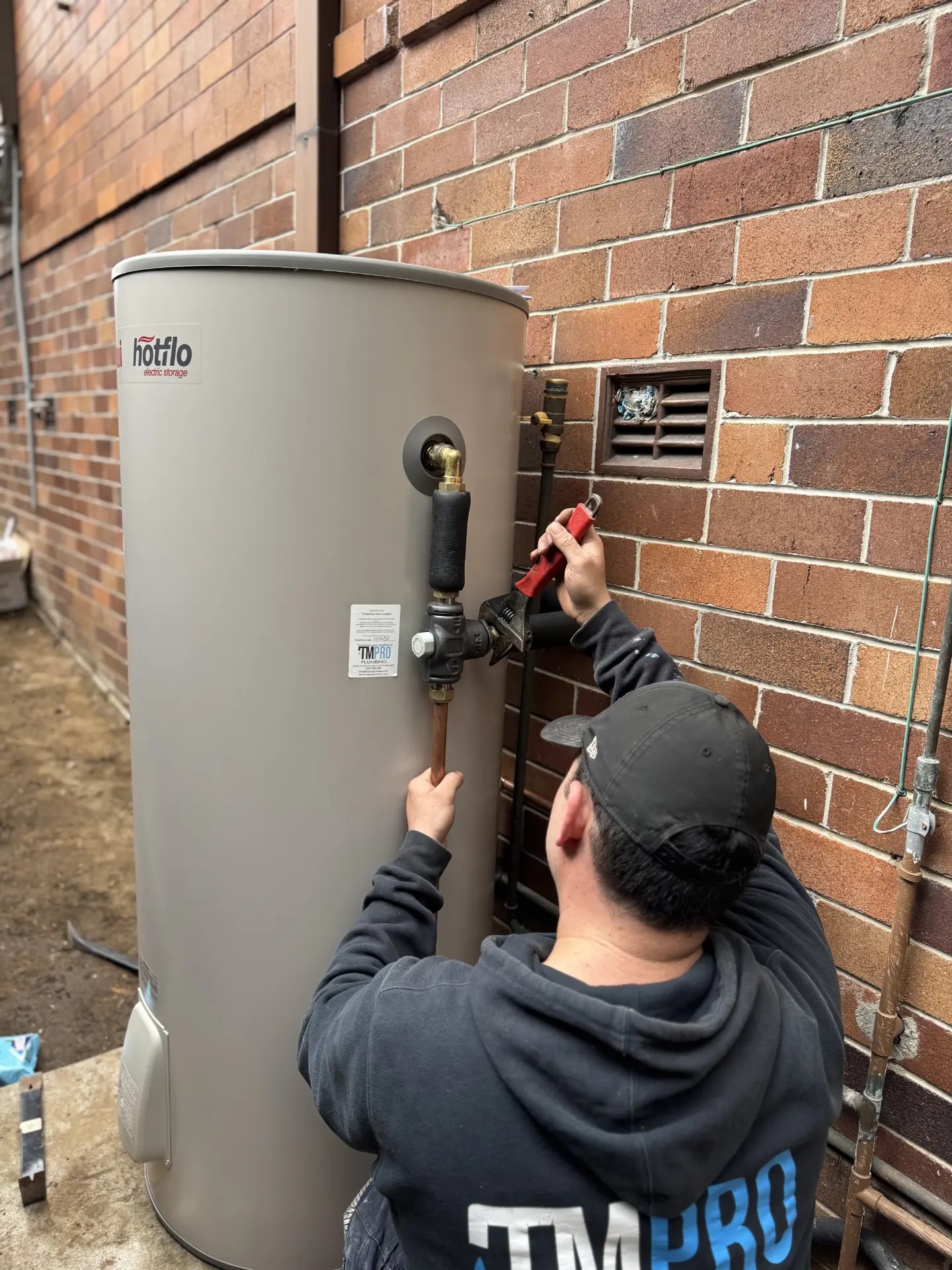
A good rule of thumb: a hot water system lasts about as long as its cylinder warranty. Sometimes a bit longer, rarely much longer. In Sydney that is usually 7 to 12 years, depending on the type and model.
- Check both warranties. The parts and labour warranty is often shorter than the cylinder warranty.
- Stainless steel tanks generally last longer than enamel-lined tanks and carry a longer cylinder warranty, but cost more up front.
- The sacrificial anode protects the tank from corrosion. If it's never checked, the tank wears out sooner, especially with hard water.
Signs your system is on its way out
- Rusty or discoloured hot water while the cold runs clear. The tank lining is breaking down.
- Water pooling around the base. Usually an internal leak in the cylinder.
- A relief valve that drips constantly. A small release while heating is normal. A steady flow means the valve has failed or the pressure is too high.
- Running out of hot water sooner than usual. A failing element or thermostat, or sediment taking up space in the tank.
- Rumbling or popping noises. Sediment boiling at the bottom of the tank.
GETTING THE SIZE RIGHT
What size hot water system do I need?
Too small and you run out every evening. Too big and you pay to heat water you never use. Household size is the starting point. These ranges follow manufacturer guidelines for Sydney conditions.
- 1 to 3 people: heat pump around 180L, electric storage 80L to 160L. Suits apartments and smaller homes.
- 3 to 5 people: heat pump 250L to 280L, electric storage 250L to 315L. The standard family size.
- 5 to 7 people: heat pump 300L to 340L, electric storage 315L to 400L or twin element. For high use, teenagers or multiple bathrooms.
What size hot water system for a family of 4?
For a typical family of four, look at a 250L to 280L heat pump or a 250L to 315L electric storage unit. Go to the top of that range, or the next size up, if you take long showers, run several outlets at once or heat on an off-peak tariff.
THE TWO MAIN OPTIONS
Electric storage vs heat pump
For most replacements the choice comes down to the up-front price versus the running costs.
Electric storage
Reliable, simple and familiar. It costs less to buy than a heat pump but more to run over its life. A good fit where outdoor space is tight, or when you need a fast like-for-like swap.
Heat pump
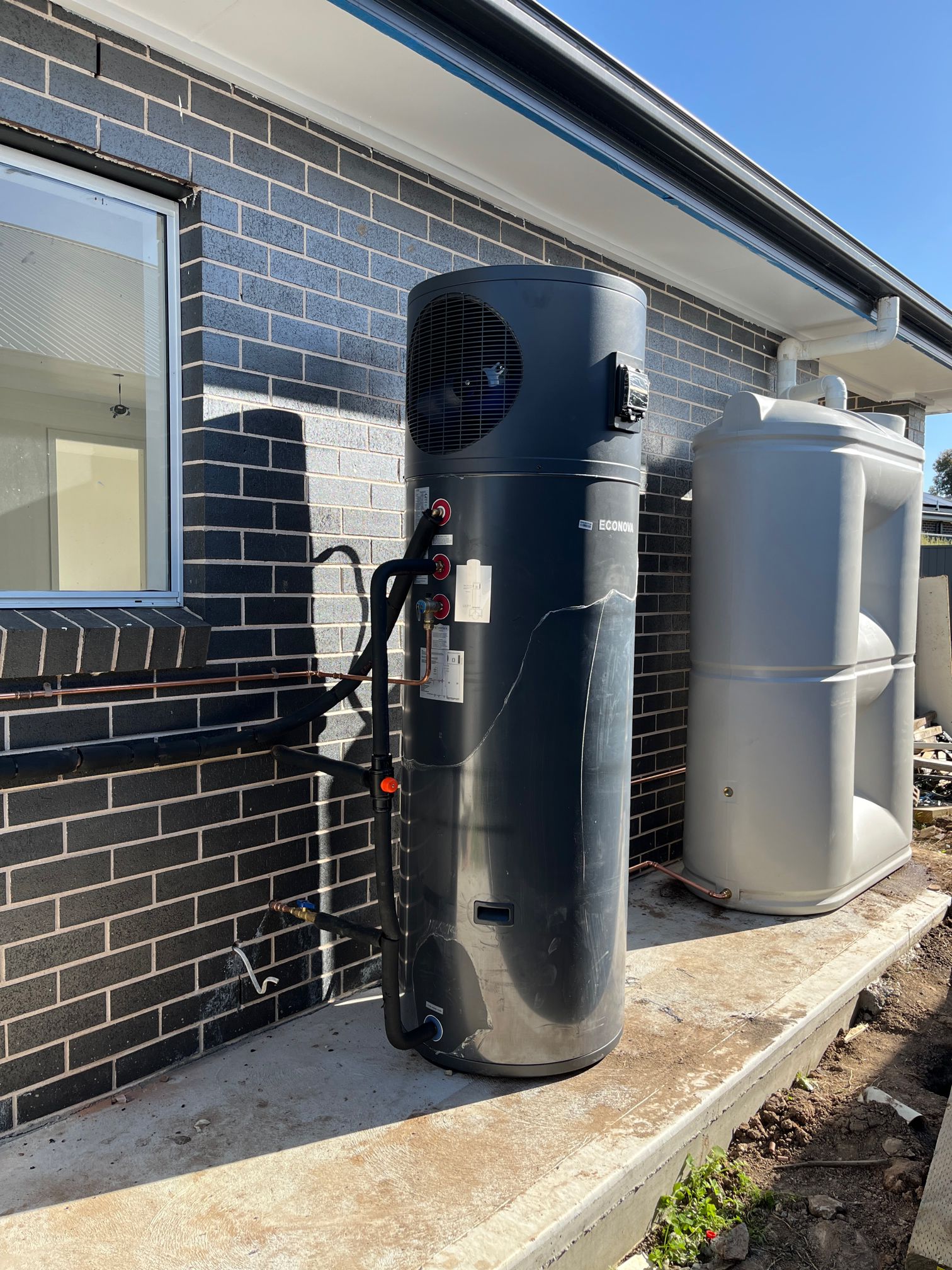
Much more energy efficient. It draws heat from the outside air instead of relying only on an element. Rebates bring the up-front price down considerably. Our heat pump hot water guide covers rebates and models in detail.
BEFORE YOU CALL
What to send us for a quote
These three things help us quote accurately and quickly.
- A photo of the data plate. It's on the side of the tank and shows the brand, model, capacity and manufacture date.
- A photo of the whole installation. Stand back a few steps so we can see the pipework, valves and space around the unit.
- Notes on access. Stairs, narrow paths or locked gates between the street and the unit.
Not sure which system suits your home?
The right system depends on your household, the space you have and how you want to balance up-front cost against running costs. If your system is leaking, running cold or past its warranty, we'll talk you through the options that suit your home, with up-front pricing and no hidden extras.