

Tempering Valves Explained
By Thomas Masters · 5 min read
Tempering Valves Explained: Why Your Hot Water Is Set at 50 Degrees
Most homes in New South Wales have a tempering valve, and most owners have never thought about it. It does its job quietly for years. People usually find out it exists when the hot water stops, and that’s how we’re often introduced to it at TM Pro Plumbing. Here’s what it does, why it matters, and why a licensed plumber should install it.
THE BASICS
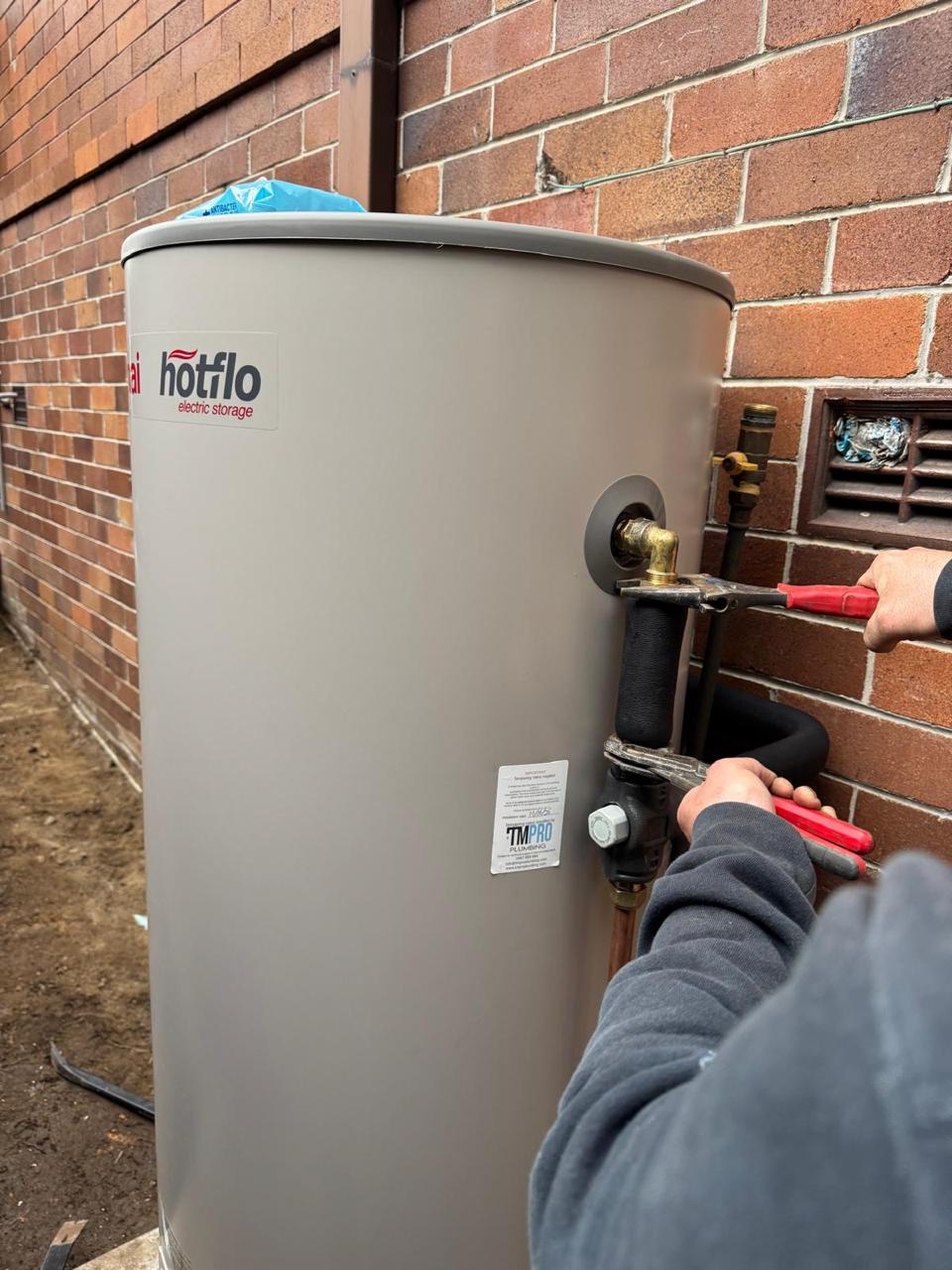
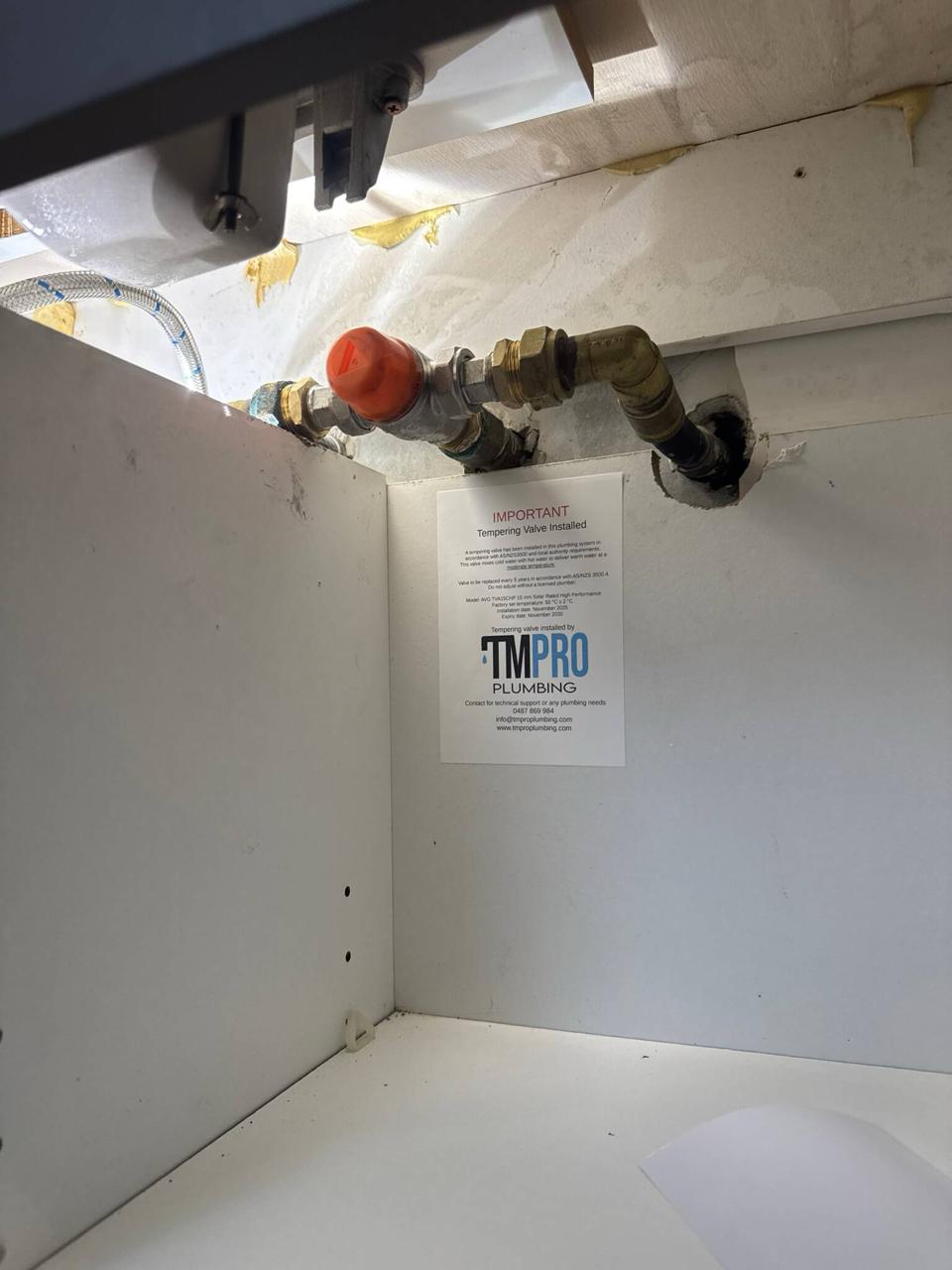
What a Tempering Valve Is and Where It Sits
A tempering valve is a safety device fitted to your hot water system. It mixes cold water into the very hot water coming from the tank, so the water reaching your bathroom is hot but not dangerous.
It sits close to the hot water unit, where heated water leaves the system. From there, the blended water travels to the fixtures it serves, such as your showers, baths, and basins. It’s a small part, but it does a lot of work.
WHY 50 DEGREES
Why Delivered Hot Water Is Limited
A hot water system has two jobs that pull in opposite directions.
The water stored in the tank has to be kept at 60°C or higher. Below that, Legionella bacteria can grow inside the tank, so the water has to be properly hot.
But water that hot can cause serious scalds, and it can do it fast. Young children and older people are the most at risk. Their skin is more delicate, and they can’t always pull away quickly enough.
The tempering valve handles both problems. The tank stays hot enough to stay safe, and the water at your bathroom taps is limited to no more than 50°C. That’s why your hot water is set where it is.
TWO VALVES
Tempering Valve or Thermostatic Mixing Valve?
People often mix these two up. Both blend hot and cold water, but they’re not the same device.
A tempering valve is the standard choice for most homes. A thermostatic mixing valve is a more precise device that responds to changes in temperature. It’s generally used where a scalpel would do the most harm, such as in aged care, early childhood centers, and healthcare settings, where stricter limits apply.
For a typical house, a tempering valve is usually what you’ll find. A licensed plumber can tell you which one your property has.
THE RULES
Where They Are Required
In New South Wales, the Plumbing Code of Australia sets a maximum delivery temperature of 50°C for hot water used for personal hygiene. That covers fixtures like showers, baths and basins. The requirement is met through the Australian Standard for heated water services, AS/NZS 3500.4.
Kitchen sinks and laundries aren’t covered by that limit. Some buildings, such as aged care and early childhood facilities, have stricter rules again. If you’re unsure what applies to your property, a licensed plumber can confirm it.
WARNING SIGNS
Signs Your Tempering Valve Has Failed
A failed valve stops mixing the hot and cold water properly. Here’s how that usually shows up.
No Hot Water
This is the most common reason people call us. The valve has worn out, and the hot water has dropped away or stopped. It’s often the moment an owner learns the valve exists. By then it’s usually well overdue for replacement.
Lukewarm Water
The shower never quite gets hot, even though the hot water system itself seems fine.
Water That Keeps Changing
The temperature swings up and down while you’re using it, with no obvious cause.
Water That Runs Too Hot
This is the dangerous one. If a worn valve lets water through too hot, it can scald. If your hot water ever feels hotter than it should, take care around that tap and call a licensed plumber.
These symptoms can also come from the hot water system itself, so a plumber needs to inspect before anyone blames the valve.
LEAVE IT TO A PLUMBER
Why This Is Not Something to Adjust Yourself
When the hot water goes strange, it’s tempting to have a go at fixing it. Please don’t.
A licensed plumber also understands how the whole system is meant to be set up, and can check that the water is leaving at a safe temperature.
REPLACEMENT
How Long They Last and What Replacement Involves
A tempering valve should be changed every 5 years. That’s a compliance requirement, and it’s also about safety. Don’t wait until it stops working. A worn valve can fail without warning, and the failure that matters most is the one where water comes through too hot.
Replacement is work for a licensed plumber. We fit a new valve and make sure the system delivers water at a safe temperature before we leave. If you’re weighing up a new system altogether, our guide to hot water replacement covers what to consider.
Call a Licensed Plumber in New South Wales
If you don’t know when your tempering valve was last replaced, it’s probably due. The same goes for lukewarm water, a temperature that keeps changing, or water that runs too hot.
TM Pro Plumbing services New South Wales and surrounding Sydney suburbs. Call us to have your valve checked, or see our hot water service page for the rest of what we do.
Need help with your plumbing?
Request a booking with our licensed Sydney plumbing team, with up-front pricing and no hidden extras.