


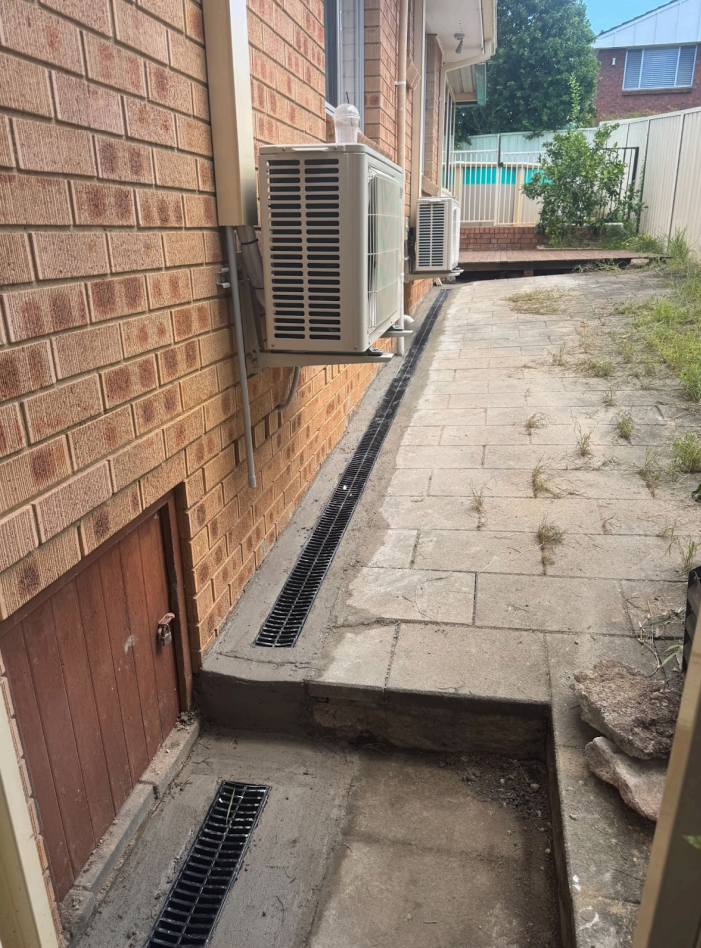
There is a problem with the drainage on the side of the house in Arncliffe.
We were called to a residence in Arncliffe not so long ago because the owner was having ongoing water issues on the side of the house.
When it rained, water would flow quickly across the paved area and under the house and deck. Over time, this was generating problems with moisture under the property. The owner had already seen mold growing in the house, and the wood under the house was starting to show signs of wear and tear. If water keeps getting into these spots, it can eventually do a lot of harm to the building.
The problem was that there wasn’t a suitable spot for the water to drain and leave the paved area. The water wouldn’t go away; instead, it would sit on the pavers and slowly flow toward the house. To fix the problem the right way, we proposed putting in a strip drain along the side of the property to catch the surface water and send it away.
Removing the Old Pavers to Make Room for the New Drains
The first step in this Arncliffe drainage operation was to remove the pavers that were already in place on the side of the home. You need to be able to go down to the ground and check that the levels are right so that water may flow down the drain without any problems.
After we lifted the pavers, we got the trench ready for the new strip drain. The drain must be at the proper height so that water that runs across the surface goes straight into the channel. If the levels aren’t perfect, water will just flow past the drain instead of into it.
Installing the Strip Drain System
After we dug the trench, we put the strip drain along the paved area next to the home. Strip drains are designed to collect water from the surface in a long, narrow route. People commonly put them adjacent to houses, on roads, and along paved areas to keep water from spreading too far.
All the water that used to flow over the pavers now accumulates in this drain. The water no longer flows under the house or the deck. Instead, it goes into the strip drain and, ultimately, into the system for stormwater.
Getting the Right Drainage Fall
Setting the fall correctly was one of the most important parts of this job. We created a slight slope at the back of the area so that any water that was under the deck or running behind the paved area would naturally flow toward the strip drain.
Without this fall, the water would merely sit behind the concrete and keep getting under the home. Now, when water collects there, it goes to the drain instead of spreading out over the pavers.
Why Drainage Falls Are Important
Drainage systems work when there is the correct amount of fall. Water always flows to the lowest point; therefore, when we put in drains, we make sure that the land surrounding them is at the appropriate level to send the water to the drain channel. We adjusted the levels in this Arncliffe job so that water under the deck goes directly to the strip drain.
Concrete Was Used to Hold the Drain in Place
We poured concrete on both sides of the strip drain after positioning it in the proper spot. This step is very important because it keeps the drain from moving and keeps it in place. Concrete also keeps the paving around it in place and the drain at the proper height.
If strip drains aren’t securely attached, they can slide over time, which lets water run around the drain instead of into it. We poured concrete on both sides of the drain to make sure it is strong, solid, and ready to use for a long time.
How the New Drainage System Protects the House
The new strip drain now stops water from spreading out over the paved area. Instead of going under the house and causing moisture problems, the water goes straight into the drainage system. This keeps water from pooling under the deck and protects the wood structure under the house.
It is highly important to keep water from getting under a house since moisture can cause a lot of difficulties, such as:
The homeowner in Arncliffe has averted what could have turned into a much bigger and more expensive problem by putting in the appropriate drainage early on.
Signs That Your Property Might Need Drainage
A number of properties in Arncliffe and the surrounding areas have the same drainage problems, especially when there are paved areas or decks near the house. Here are some signs that you might need to conduct some work on your drainage:
If you see any of these issues, you should hire a plumber to inspect the drainage before it gets worse.
Drainage Solutions for Homes in Arncliffe
At TM Pro Plumbing, we typically install strip drains, stormwater drains, and surface drainage systems for properties in Arncliffe. We look at the levels, paving, and adjacent areas to make the finest drainage system for each house.
This strip drain installation in Arncliffe solved the problem by collecting water from the surface and sending it away before it could get beneath the house.
Call TM Pro Plumbing right immediately to arrange an inspection if you live in Arncliffe and are having difficulties with drainage. We can help keep water from hurting your home.
Comments are closed